Bedroom noise · 2 min read
How to Reduce Bedroom Noise for Better Sleep
Renter-friendly noise reduction for traffic, noisy neighbours, partners, pets and appliances.
By Sleep Setup Lab Editorial Team
Some links are affiliate links. If you buy through them, we may earn a commission at no extra cost to you. Read our affiliate disclosure.
Quick answer
1. Identify the noise source
Spend one evening listening. Note when the noise happens, whether it is high-pitched (voices, TV) or low (bass, engines), and where it seems loudest.
- Traffic and street noise usually enter through the window.
- Neighbour voices often come through doors, shared walls or vents.
- Appliance hum may be inside your own home and easy to move.
2. Treat doors and windows first
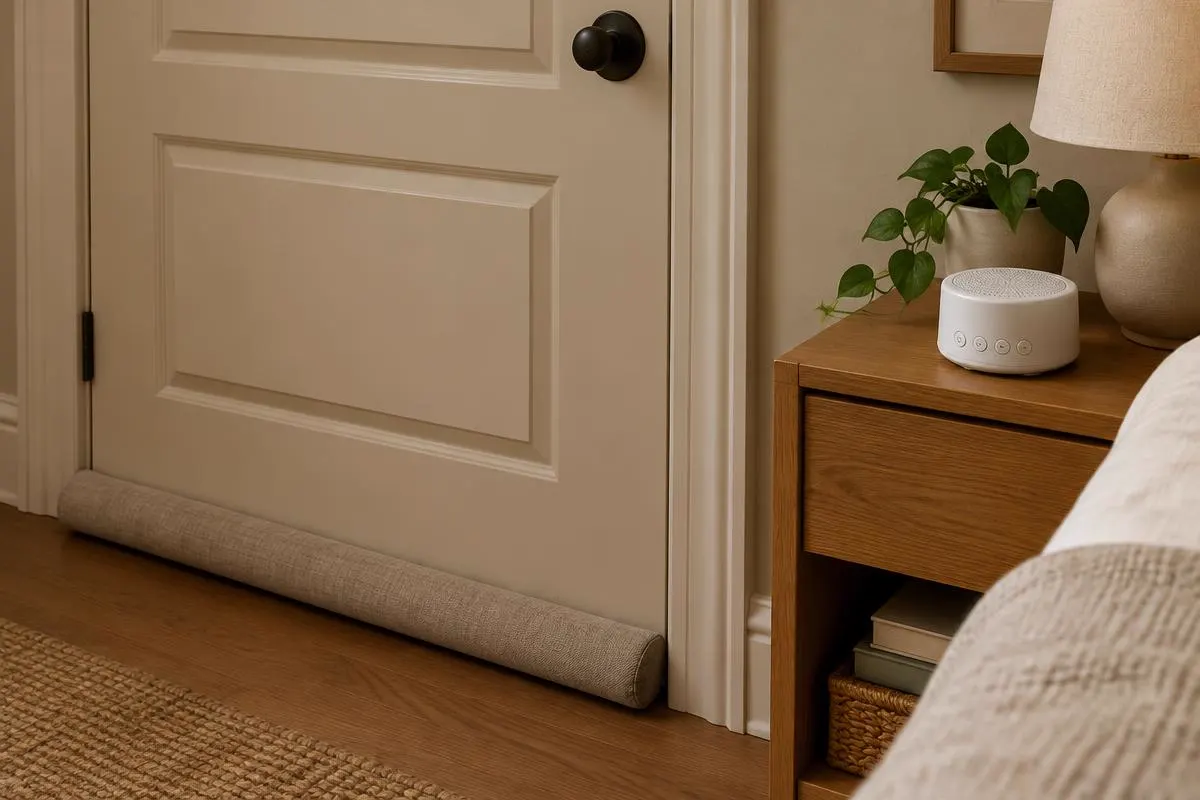
- Fit an under-door draught stopper to close the gap at the floor.
- Add self-adhesive seal tape around the door frame where light shows through.
- Check window sashes for rattles and seal gaps with removable tape.
- Close internal doors between the bedroom and noisy rooms.
3. Soften hard surfaces
Bare floors, walls and windows reflect sound. A thick rug, heavy lined curtains, an upholstered headboard and a filled bookcase on a shared wall reduce echo inside the room. This makes a room feel quieter, but it does not stop sound passing through a wall.
4. Move the bed
Moving the bed away from the street-facing window or the shared wall is free and often noticeable. Try a different wall for a few nights before buying anything.
5. Compare sound masking
Steady background sound makes sudden noises less noticeable. Fan-based machines give a natural, non-looping sound; digital machines offer white, pink or brown noise. Keep the volume moderate and place the machine between you and the noise source.
Limits and alternatives
If noise is structural, persistent or comes from a neighbour, a conversation or your landlord may achieve more than any product. Foam earplugs are a low-cost alternative worth testing alongside other changes.
Comparison
| Option | Best for | Cost | Removable | Limit |
|---|---|---|---|---|
| Door draught stopper | Hallway voices, TV | Low | Yes | Only the gap |
| Seal tape | Rattling frames | Low | Mostly | May mark paint |
| Heavy curtains + rug | Echo, high sounds | Medium | Yes | No wall soundproofing |
| Moving the bed | Street or shared wall | Free | Yes | Depends on layout |
| White noise machine | Sudden noises | Low–medium | Yes | Masks, does not block |
Who this is for
- Renters who cannot make structural changes
- Light sleepers disturbed by traffic, voices or appliances
Who should skip it
- People with constant low-frequency noise from structure — you may need a landlord or building-level solution
- Anyone who suspects a hearing or health issue — speak to a qualified professional
What to buy
Door/window seals
Under-door draught stopper
Best forGaps under bedroom doors
Strengths
- No tools
- Removable
Limitations
- Only treats the gap, not the door panel
- Fit
- Slides onto door
- Install
- No drilling
Door/window seals
Self-adhesive foam seal tape
Best forDoor frames and window sashes that rattle
Strengths
- Low cost
- Cut to length
Limitations
- Adhesive may mark some paint
- Install
- Peel and stick
- Material
- EPDM or foam
White-noise machines
Fan-based white-noise machine
Best forSteady masking of traffic and hallway noise
Strengths
- Natural, non-looping sound
- Simple controls
Limitations
- Fewer sound options
- Masks noise rather than blocking it
- Power
- Mains
- Sounds
- Fan/airflow
White-noise machines
LectroFan EVO white noise machine
Best forTravel and choosing between white, pink or brown noise
Strengths
- Compact
- Multiple sound profiles
Limitations
- Cheaper units can loop audibly
- Power
- USB or battery
- Sounds
- Multiple
FAQ
Do blackout curtains block noise?
Heavy curtains soften high-frequency sound and reduce echo, but they do not fully soundproof a window or wall.
Is white or pink noise better for sleep?
It comes down to preference. Pink and brown noise sound deeper and softer; try each at a low volume for a few nights.
Printable checklist
Bedroom noise audit
Find and treat the main noise paths in one evening.
- Note when and where noise is loudest
- Check under-door gap
- Check door frame and window seals
- Count hard surfaces (floor, walls, glass)
- Try the bed on another wall
- Test sound masking at low volume
Keep reading: 5-Minute Bedroom Reset for Better Sleep
This site provides practical information about the sleep environment. It is not medical advice and does not diagnose or treat a condition.